
FAROS
A digital and physical guidance system helping parents navigate their children’s gaming with more clarity, structure, and connection.
Project Overview
Children are growing up surrounded by digital games, while many parents are expected to make decisions about safety, content, playtime, and online interaction without fully understanding the games themselves. Over 13 weeks, we explored how design could support parents without creating another restrictive parental-control tool. The outcome was FAROS — a guidance-based experience combining a parent app with a physical companion designed to support both parent and child.
Brief
We were challenged to explore: What does it mean to raise children in the internet era? We began with a broad investigation into children’s digital lives, looking at screen time, gaming, online safety, digital habits, and parent–child dynamics. Rather than assuming technology was either good or bad, we used research to understand where parents were actually struggling and where design could create meaningful support.
Challenge
Our research revealed a recurring tension: parents want their children to enjoy gaming, but often lack the time, knowledge, and confidence to evaluate games and create healthy routines. They often rely on Google, other parents, or intuition — leading to conflicting information and uncertainty. How might we help parents make informed gaming decisions without creating another control-based solution? That keeps the important story and removes repetition.
My role - Project Coordinator / Producer · Research Lead · UX Strategy
I led the research direction while helping coordinate the project from research to final delivery. I planned workflows, organised tasks and priorities, tracked deadlines, and helped keep the team aligned. I also contributed to research synthesis, concept development, prototyping, testing, documentation, and the final pitch. My focus was keeping the process moving while ensuring our decisions remained grounded in user needs.
Research
Research Approach
We started broad, exploring how parents navigate children’s digital lives before narrowing our focus to online gaming. To understand both behaviours and attitudes, we combined different research methods: 9 parent interviews · 36 survey responses · social media research · desk research · competitor analysis.
Quantitative Research
36 survey responses helped us identify recurring patterns around confidence, gaming benefits, playtime challenges, and parents’ support needs.
Qualitative Analysis
9 parent interviews were synthesised into recurring themes, revealing the motivations, uncertainties, and tensions behind parents’ behaviour.
From data to insights
GUIDANCE — Parents lack the time and knowledge to evaluate games and need quick, trustworthy information.
STRUCTURE — Parents struggle to manage playtime consistently and often feel they are navigating it alone.
CONNECTION — Parents see value in gaming but need support balancing its benefits and risks.
THE OPPORTUNITY — Most existing tools focus on monitoring and restriction. Parents don’t need another tool to control gaming. They need support to understand and guide it.
Exploring the Solution with Low-Fidelity Prototypes
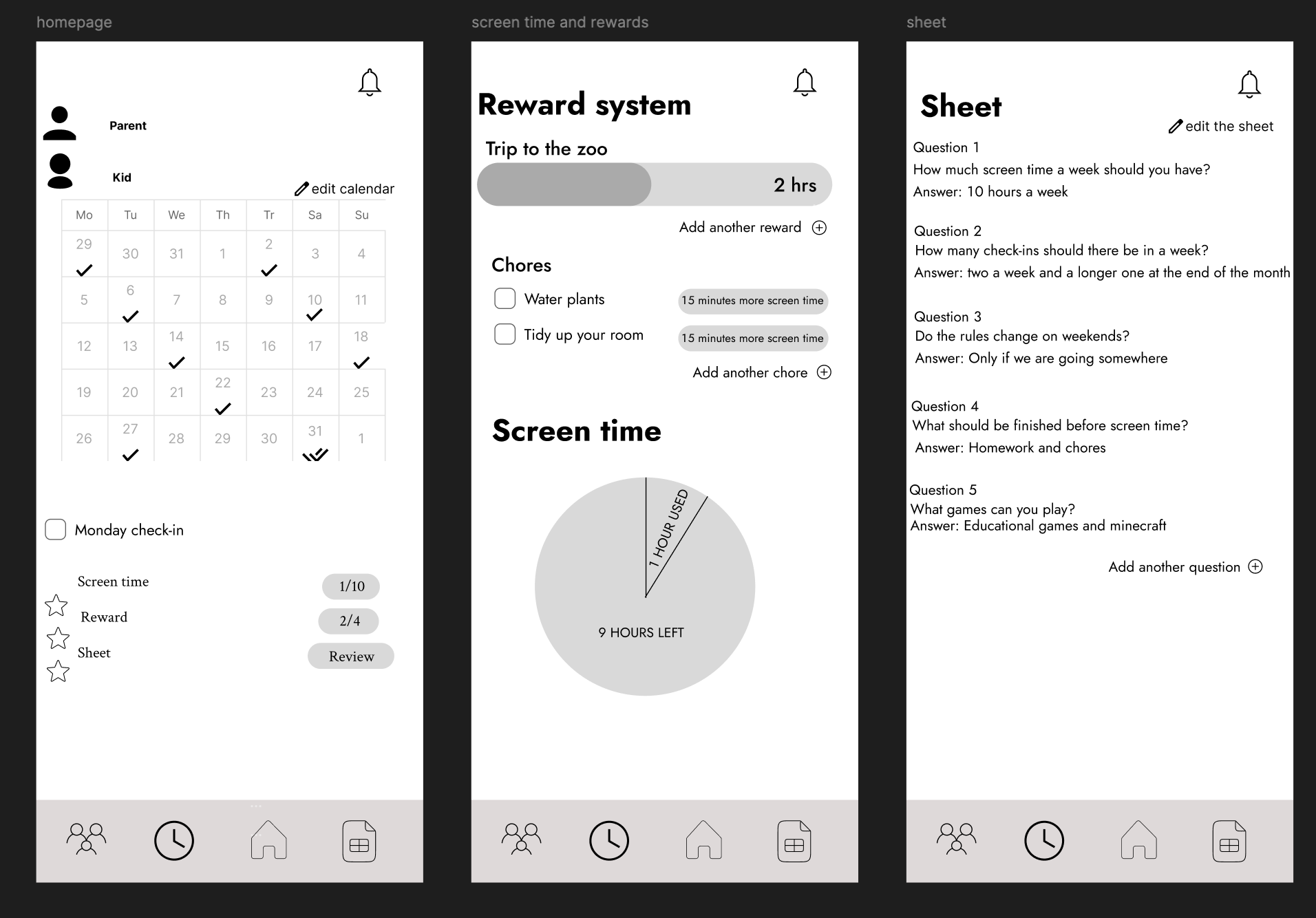
01 Parent–Child Check-in
Shared playtime planning and routines.
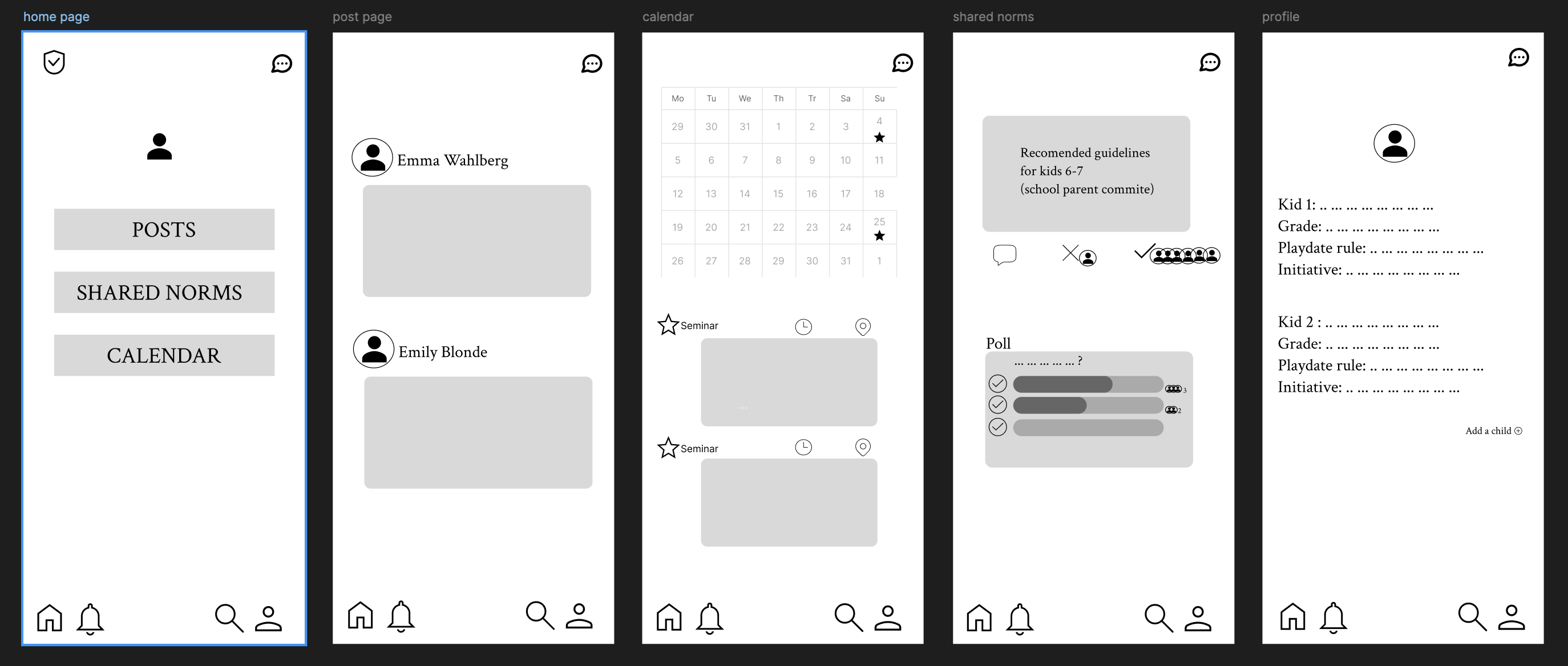
02 Parent Alignment Platform
Shared guidance between parents and schools.
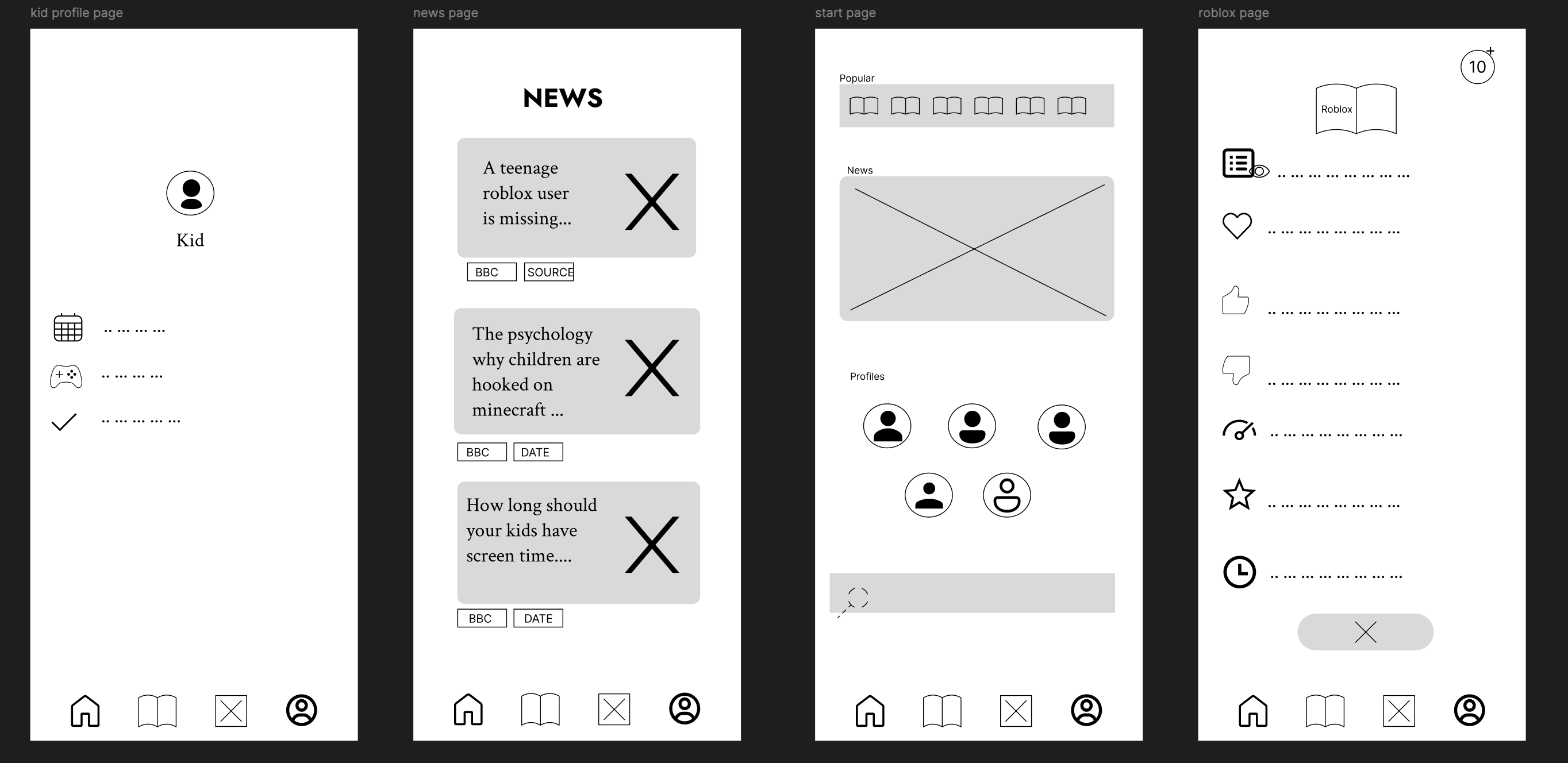
03 Gaming Guide
Quick, trustworthy guidance about games.
Choosing a direction
We tested and compared the concepts against our research findings. The Gaming Guide most directly addressed the strongest need: helping parents make quick, informed decisions without having to research games themselves. We selected this direction and developed it further through mid-fidelity prototyping and testing.
Testing & Iteration
Once we selected the Gaming Guide direction, we developed the concept further and tested it with parents to understand what worked, what was unclear, and what they valued most.
These are the three strongest findings we identified:
- Safety comes first — Parents wanted clear information about online interaction, risks, and age suitability.
- Trusted information matters — Parents wanted quick, reliable information and pre-vetted recommendations rather than having to research games themselves.
- Guidance over control — Parents valued tools that supported planning and communication rather than simply restricting gaming.
Refining the Concept
After selecting the Gaming Guide direction, we moved into mid-fidelity prototyping and tested the concept with parents. Testing revealed that the concept was trying to solve too many problems at once. We narrowed the experience around a clearer user scenario: helping parents quickly understand a game and make an informed decision. This became the foundation for developing FAROS further.
Early mid-fi → Refined mid-fi. Key shift: From a broad family gaming platform → to focused guidance for parents.
We tested the concept with parents to understand whether the features were useful, clear, and relevant to their needs. Testing reinforced three priorities: safety, trustworthy information, and guidance over control. The feedback helped us refine the experience and prioritise the features that provided the most value.
Parents needed quick, trustworthy information → Clearer game overview.
Parents didn’t want to research games themselves → Pre-vetted, age-based recommendations.
Parents wanted support beyond restriction → Playtime planning + conversation prompts.
Meet FAROS
A guidance-based experience helping parents understand, plan and connect around gaming.
Beyond the Screen: The FAROS Lamp
We extended the experience beyond the app with a physical companion that makes playtime visible to the child. As playtime progresses, the light gradually changes. When the session is nearly over, light and sound provide a gentle signal — supporting smoother transitions without constant parental reminders.
Outcome & Reflection
FAROS evolved from a broad exploration of digital parenting into a focused experience built around guidance rather than control. The project strengthened my ability to lead research, translate complex findings into clear priorities, and coordinate an iterative design process from exploration to delivery. Most importantly, I learned that good coordination isn’t only about keeping a project on schedule — it’s also about creating enough structure for a team to test, change direction, and make better decisions along the way.
If we continued… Further development would focus on advanced game filtering, validating the FAROS lamp with children, and exploring responsible AI-supported personalisation.