From Collaboration to Shared Ownership
From Collaboration to Shared Ownership 2026
The Brief
How can multiple actors move from collaboration to shared ownership in practice?
What structures and processes support collaboration? What role do leadership and facilitation play? How do group dynamics influence collaboration between organizations?
The Challenge
Multiple actors were already working toward social sustainability in Skäggetorp, but collaboration was fragmented. Communication gaps, siloed ways of working, and limited shared coordination made it difficult to build trust, shared ownership, and long-term preventive action.
Research & Understanding the System
To understand why collaboration was difficult, we combined desktop research, interviews, stakeholder analysis, and existing platform research.
Key Research Findings
01 — Collaboration already exists
Actors were already working together, but communication and coordination remained fragmented.
02 — Trust is essential
Long-term collaboration depends on trust, psychological safety, and strong relationships.
03 — Technology isn’t enough
Digital tools can support collaboration, but they cannot replace communication, relationships, and shared ownership.
Reframing the Challenge
We explored the deeper causes behind weak shared ownership to understand where change was actually needed.
The Turning Point
We thought: Actors need to collaborate more.
We discovered: Actors already want to collaborate.
The real challenge: Creating sustainable collaboration through stronger coordination, communication, and shared ownership.
This shifted our focus from creating more collaboration to improving the systems and conditions that help existing collaboration last.
From Insights to Strategy
Based on our research, we developed a strategy combining digital tools with human-centered collaboration.
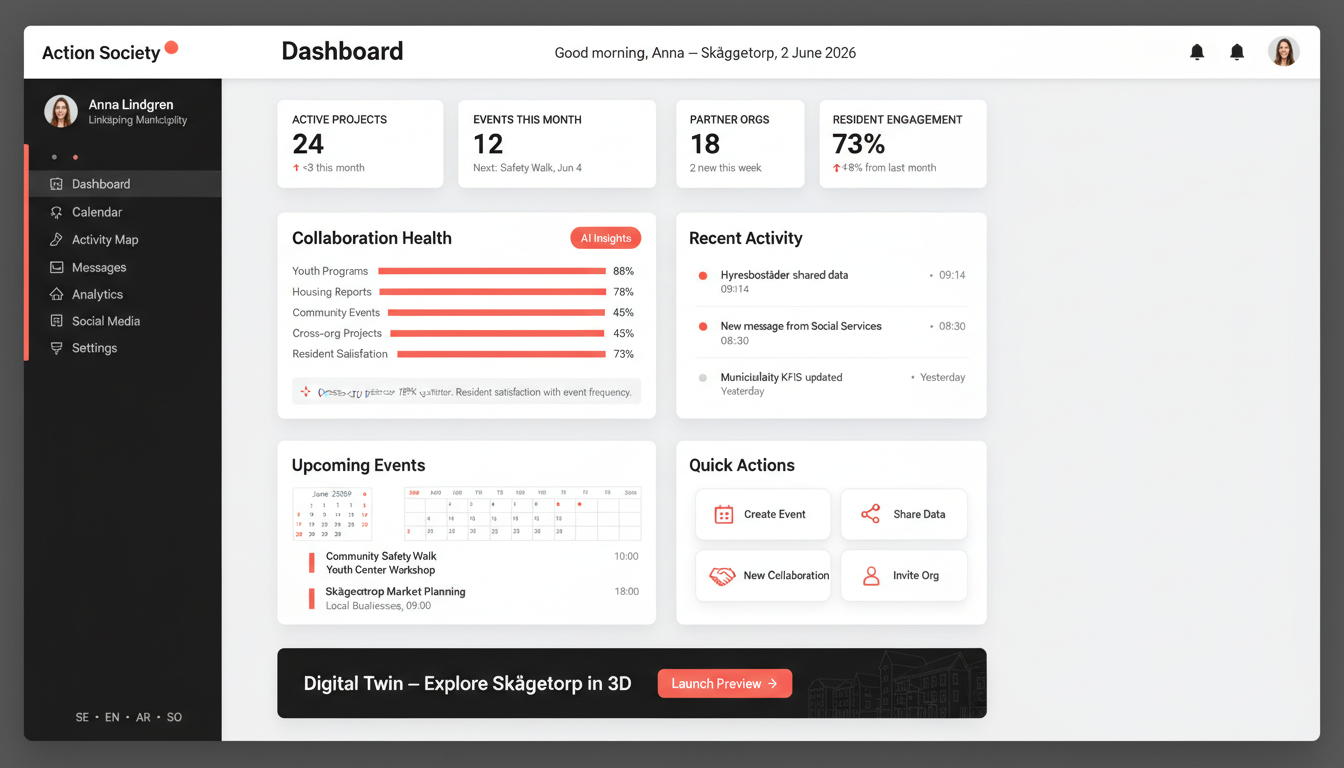
COLLABORATION hub
Dashboards & KPI tracking. Multilingual access. Shared calendar. Activity mapping. Social media integration. AI data visualization features. (A version for actors & for residents)
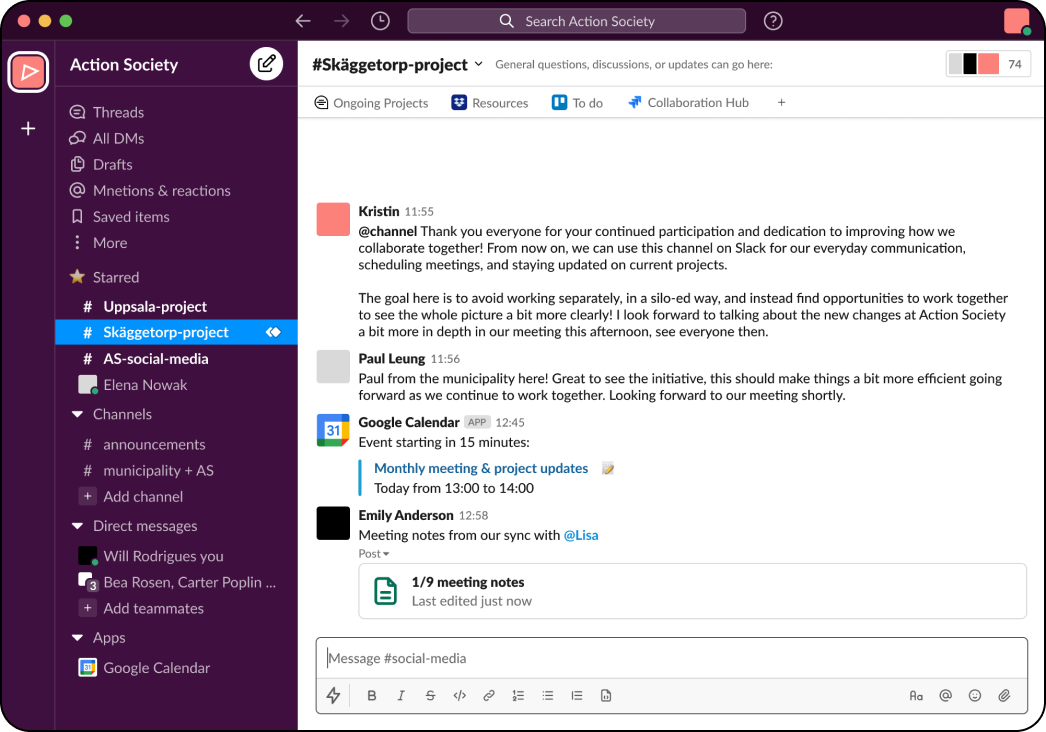
COMMUNICATION PLATFORM
- Slack for daily messaging
- Different channels → different projects/groups
- Important updates, resources, or discussions can be shared
- Action Society as the facilitator
(Only for actors)
Facebook, LinkedIn and Instagram
Visibility, storytelling, engagement.
- Create official page
- Invite all project actors
- Share project updates weekly
- Create discussion posts
- Publish one post per week
- Share project learnings
- Highlight partnerships
- Redesign visual identity
- Create templates
- Post 2–3 times weekly
WORKSHOPS
- Trust-building activities
- Shared problem-solving sessions
- Involving the actors in designing sessions → how can it benefit you?
From Strategy to Change
To turn the strategy into a long-term change process, we used Kotter’s 8-Step Change Model and adapted it to Action Society’s context.
Turning the Framework into Action
We translated Kotter’s model into a phased roadmap for long-term implementation.
4-5 ACTIVATION
- Onboard collaboration & communication hub
- Monthly trust-building workshops & shared problem-solving sessions
- Collab. visualization, framtidskartan/digital twin integration
6 months - 1 year
My Contribution
I took responsibility for planning and coordinating the team’s workflow while also contributing to the research process. I created weekly schedules, organized meetings and working sessions, tracked deadlines and absences, and helped keep the team aligned throughout the project. Alongside project coordination, I helped organize and synthesize research findings to identify patterns that informed the team’s final strategy.
Weekly project schedule used to coordinate tasks, meetings, deadlines, and team availability.
Reflection
This project taught me that project management is not only about creating a plan — it is also about helping a team move forward when the direction is unclear. Navigating a complex brief affected our momentum at times, and taught me to create structure while staying flexible and keeping the team aligned through uncertainty. I also learned that sustainable change is deeply human. Tools and systems can support change, but long-term impact depends on trust, relationships, and shared ownership.